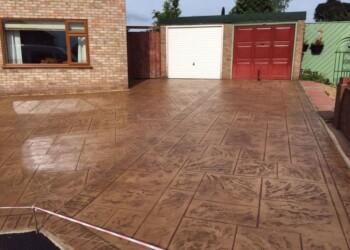
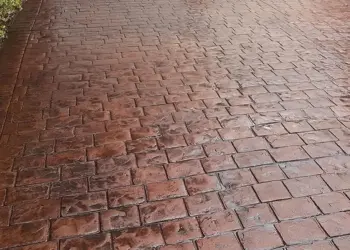
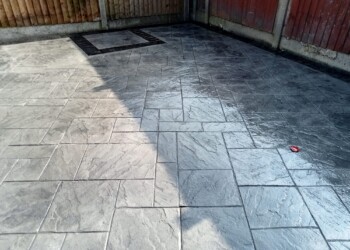
The original colour looks pale, chalky or inconsistent in exposed areas.
Allsurface Groundworks Co. Waterford – Tarmac and Driveways Contractors
Professional cleaning, coating assessment, suitable recolouring and protective resealing for pattern-imprinted concrete driveways and patios.
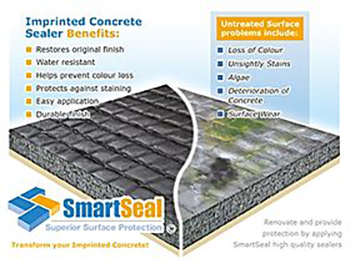
As protective sealer wears, imprinted concrete can lose sheen and colour depth. Dirt, algae, tyre marks and uneven older coatings may also make the surface look tired.
Restoration begins with identifying the condition of the concrete, control joints, repairs, colour and previous coating. The correct cleaning and resealing method depends on what is already present—not simply what is visible from a distance.

Suitable treatment can improve appearance and protection, but structural defects must be assessed separately.
The original colour looks pale, chalky or inconsistent in exposed areas.
The sealer has worn through traffic and weather, leaving dull patches.
Algae or moss has developed in textured areas, joints or shaded sections.
Old sealer may whiten, peel or separate where moisture or incompatibility is present.
Tyre marks, dirt and contaminants can affect the visual consistency.
Small areas may need suitable colour attention before protective sealing.
IDENTIFY THE EXISTING COATING FIRSTApplying fresh sealer blindly over an unsuitable old coating can trap contamination, create whitening or lead to poor adhesion. We assess wear, previous build-up, moisture and any failing areas first.
The exact sequence depends on the concrete and previous sealer.
Assess concrete, joints, coating, colour loss, moisture and damage.
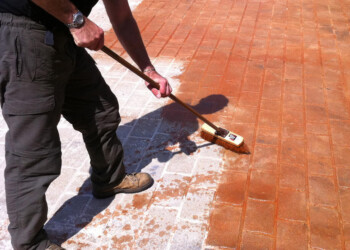
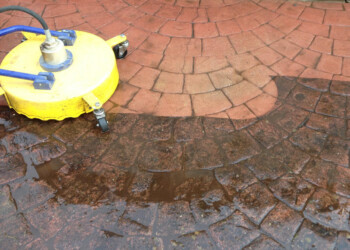
Remove dirt, growth and contamination using an appropriate method.
Complete agreed local repair, coating and joint preparation.
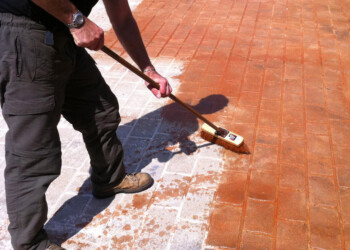
Apply suitable colour treatment selectively where the surface requires it.
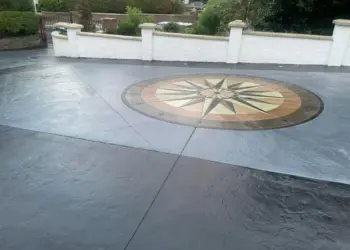
Apply compatible protective sealer under suitable dry conditions.
Colour restoration must complement the existing base tone and printed texture. Depending on wear, selective tinting or compatible colour treatment may help revive faded areas before sealing.
Historic patches, aggregate exposure, permanent staining and previous colour variations may still remain visible. We discuss the realistic likely finish before work begins.
A suitable additive may be incorporated with sealer to improve texture. However, no sealed external concrete can be guaranteed completely slip-proof.
DRY CONDITIONS · CONTROLLED APPLICATION · FULL CURINGThe surface must be suitably dry and weather conditions appropriate before sealing. Rain, low temperatures, high humidity and trapped moisture can affect appearance and performance.
After application, keep pedestrians, animals and vehicles off the area until the coating has cured sufficiently. We provide project-specific guidance.
Traffic, sunlight, weather, cleaning and contaminants gradually wear the protective coating.
Helpful information before cleaning and resealing imprinted concrete.
It may include coating assessment, appropriate cleaning, local preparation, selective recolouring and compatible protective resealing.
Only when the existing coating is suitable and compatible. Failing or excessively built-up coatings may need more preparation or removal.
No. A suitable additive may improve texture, but no outdoor sealed surface is guaranteed slip-proof, especially when wet, icy or contaminated.
There is no single interval. Timing depends on traffic, exposure, cleaning, previous products and the coating’s condition.
Arrange a surface and coating assessment anywhere in County Waterford.